I had been putting it off since January. The shoebox on top of my wardrobe was full — receipts from provision shops, coffee stalls, the occasional restaurant on Smith Street, MRT top-ups printed on thermal paper that was already fading at the edges. Tax season was not the reason; I do not earn enough for tax to be interesting. The reason was simpler and less respectable: I could not bear the clutter, but I also could not bear to throw away paper that still held the memory of a purchase. A receipt from October is a record that on a particular day I bought eggs and bread and a packet of coffee grounds from the auntie at the foot of the slope. Throwing it away feels like erasing a day.
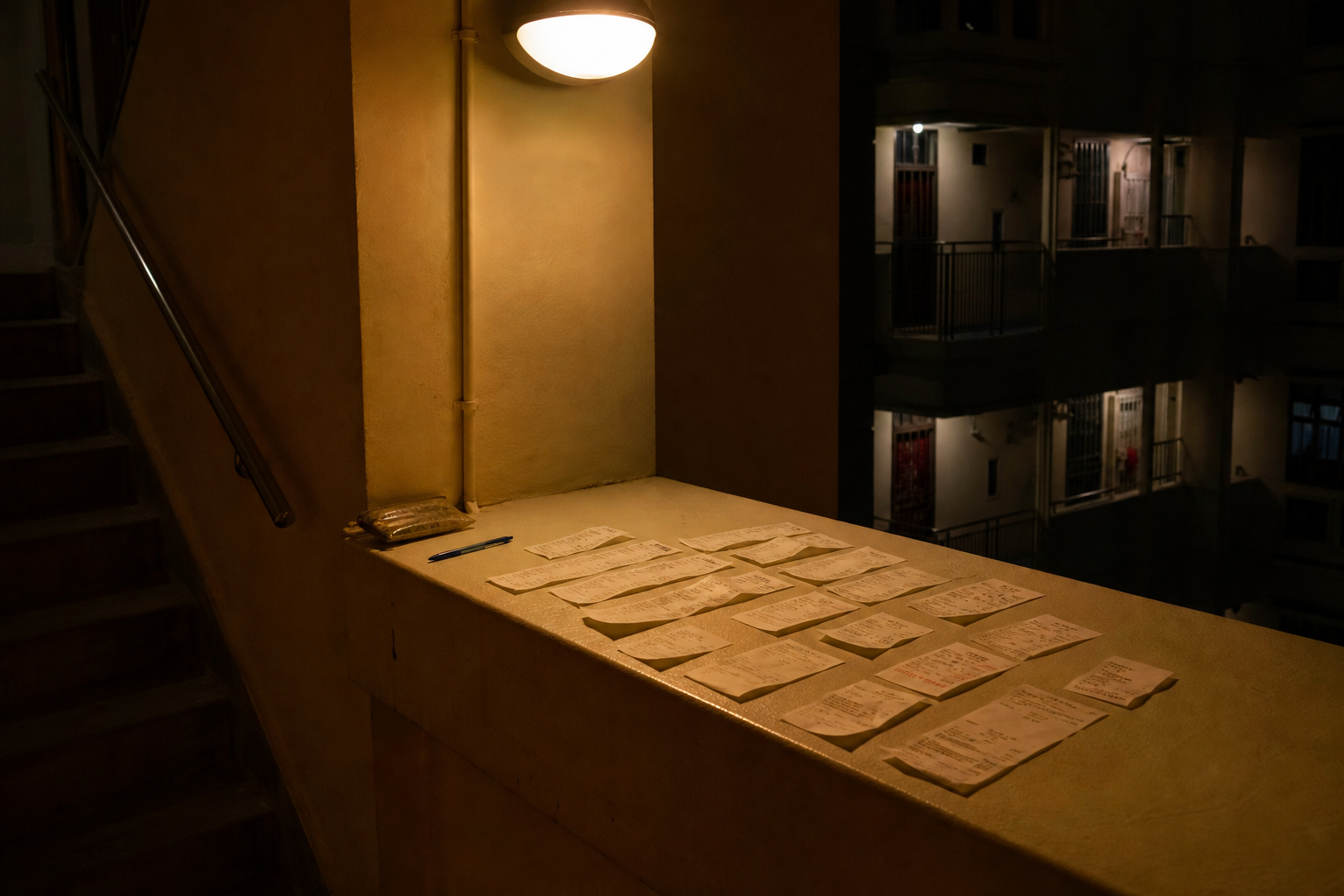
I carried the shoebox down to the fourth-floor landing, where the lamp is mounted on the wall at shoulder height and casts a pool of warm light exactly wide enough for one person sitting on the stair tread with papers spread across the step above. The landing lamp is old — a glass shade yellowed from years of bulb heat, a pull chain that clicks with a sound I have heard since I moved in. I sat on the fourth step from the landing, placed the shoebox beside me, and began.
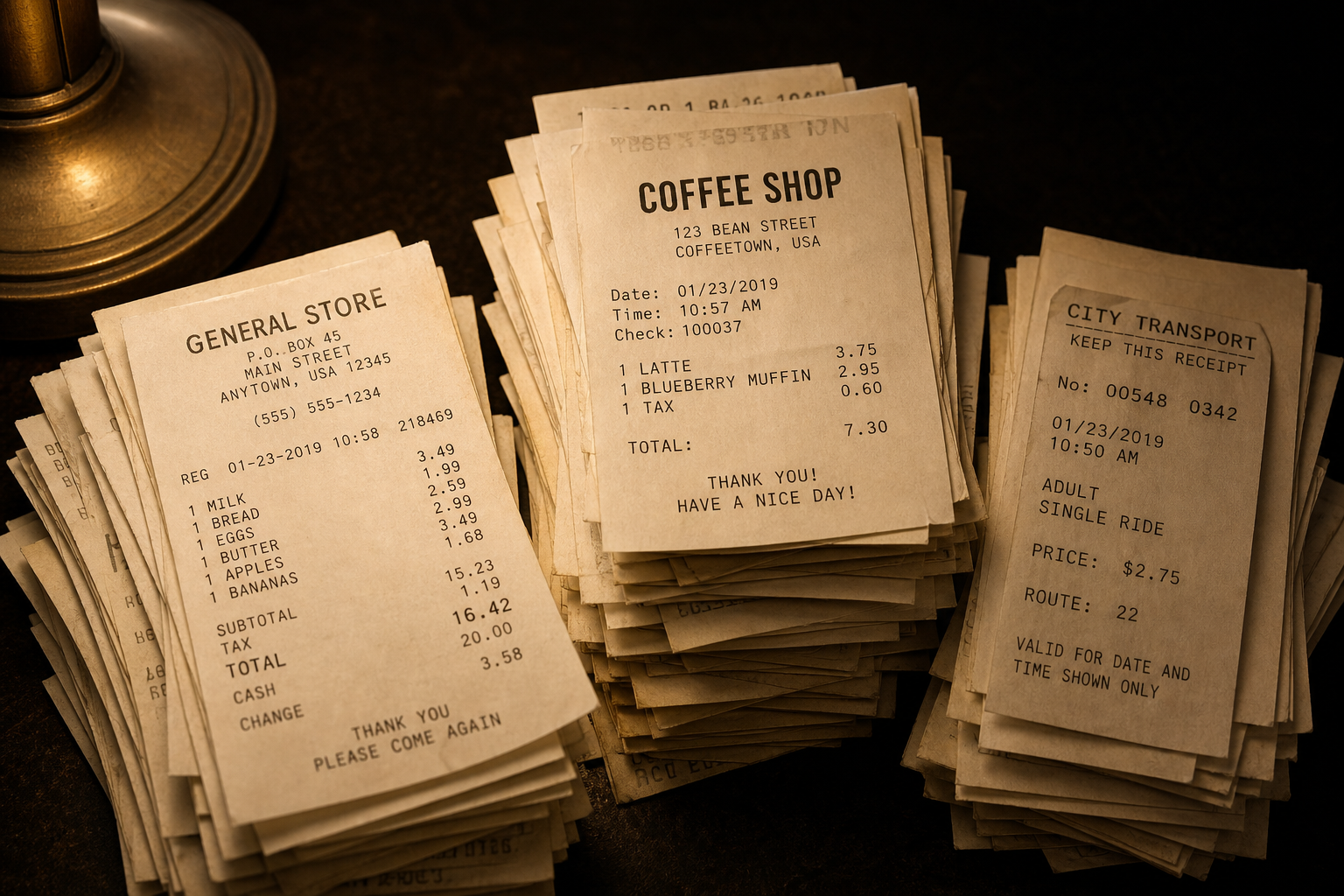
The sorting took longer than I expected. Each receipt required a decision. Provision shop — keep or discard? The thermal paper from the MRT machine had faded to blank white on the bottom half; I could read the date but not the amount. Keep, because the date was enough. The receipt from a dinner I did not remember having at a restaurant on Temple Street — discard, because if I cannot remember the meal the paper has done its job. A handwritten receipt from the market auntie for kangkong and tofu — keep, not for the amount but for the handwriting, which was careful and slanted and looked like someone who took pride in legibility.
The landing was quiet. The lamp hummed at a frequency lower than the fluorescent tubes in the void deck — warmer, more forgiving. Footsteps on the stairs above me: a neighbour descending, nodding as she passed, not asking what I was doing because on a hillside block everyone has seen someone doing something ordinary on a stair landing. The window at the landing level showed the road below — a car passing, its headlights sweeping the kerb, then dark again. The stairwell held the smell of cooking from somewhere above: garlic, then something fried, then nothing.
I made three piles. Keep: receipts with meaning — market handwriting, a book purchase from a shop that closed last year, the first receipt from my current flat when I bought cleaning supplies the day I moved in. Discard: thermal paper faded beyond reading, duplicate receipts, the automatic printout from an ATM that told me nothing I did not already know. Unreadable: a middle pile for paper that was damaged — water-stained from a leak in the shoebox, crumpled beyond flattening — that I would keep anyway because throwing away damaged paper feels worse than throwing away intact paper.
By nine o'clock I had worked through the entire box. The keep pile was smaller than I expected — perhaps thirty receipts, each one a small anchor to a day I might otherwise lose. The discard pile was larger and I took it to the bin on the ground floor without ceremony. The unreadable pile went back into the shoebox, which went back on top of the wardrobe, which would fill again by June because I cannot stop taking receipts and cannot stop assigning meaning to them.
Sitting on the landing under the lamp, I thought about what accounting means for a life that is not financial. These receipts were not about money — or not only about money. They were about presence. Proof that on 14 October I was at the provision shop. That on 3 December I ate somewhere on Temple Street. That on the day I moved to Blk 8 I bought a broom and a mop and started cleaning a flat that would become the place I write these notes. The slope keeps its own records — worn stair treads, faded kerb paint, the chess table at the void deck — but my records are paper and they live in a shoebox on a wardrobe until a March evening when the landing lamp is warm enough to read by.
I turned off the lamp when I finished. The stairwell went dark except for the green exit sign at the top. I climbed back to the second floor and made tea. The shoebox on the wardrobe was lighter and somehow the flat felt lighter too — not emptier, but more accounted for. As if naming what you have kept is the same as knowing what you are willing to let go.
— Lex