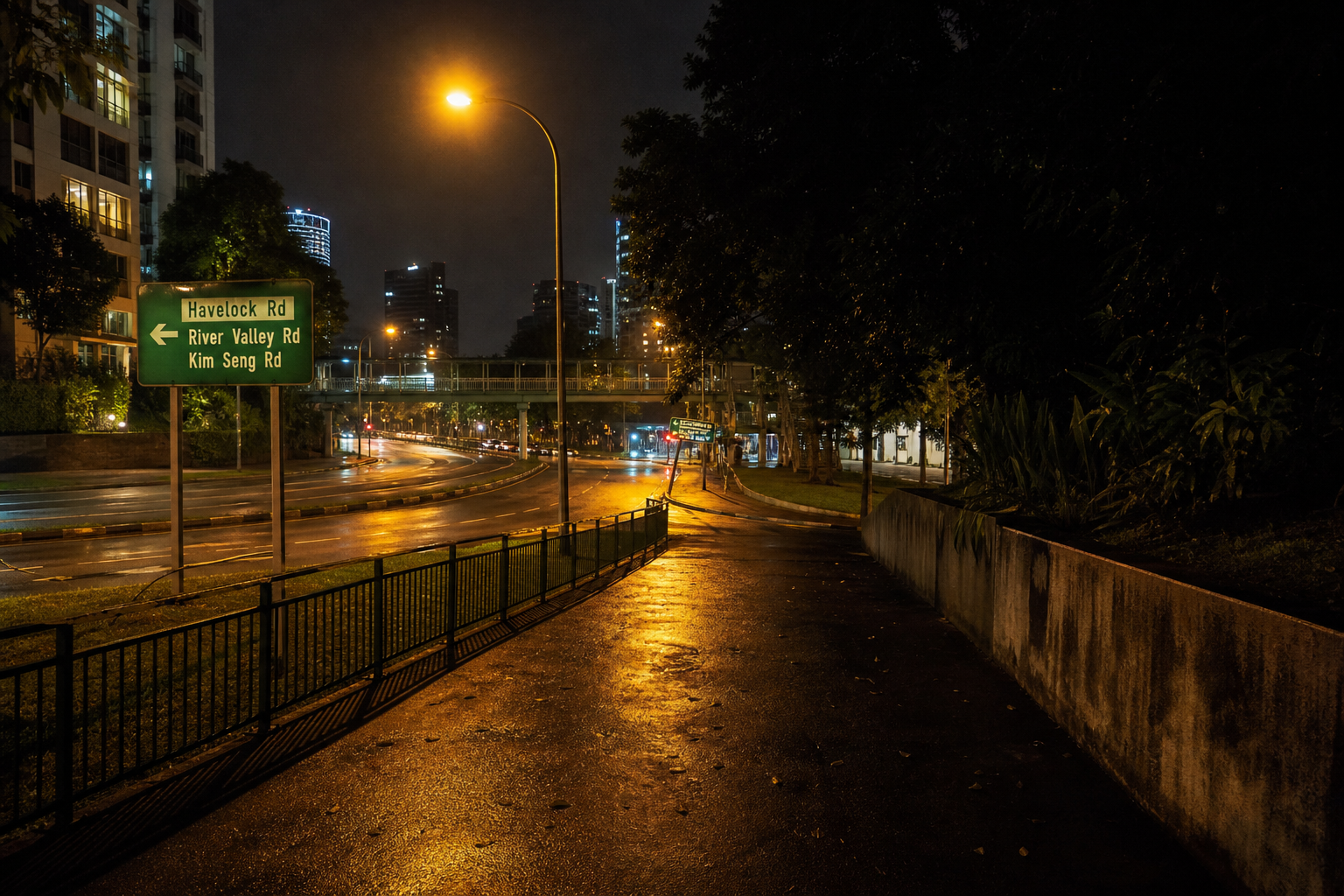
I started walking at seven-fifteen, when the sun had dropped below the tower blocks but the asphalt had not yet decided to cool. May evenings in Singapore hold heat the way a stairwell holds echo — long after the source is gone, the impression remains. I left Blk 8 and turned downhill, following the road as it curved toward Havelock. This is a walk I know by tread: which kerb sections have cracked, which footpath tiles sit slightly raised after rain, which lamp post casts a pool of light wide enough to read a receipt by.
The slope descends in stages. Each block level marks a change in air — cooler near the base, warmer near the middle landings where the stairwells trap the day's accumulation. I passed Blk 51 without stopping, though I looked at the kerb where I would stand three months later listening to sirens I could not locate. Tonight the kerb was empty and the road was quiet. A cat crossed without hurry. The yellow paint on the kerb lip was fresh in one section, as if someone had recently decided this particular boundary mattered.
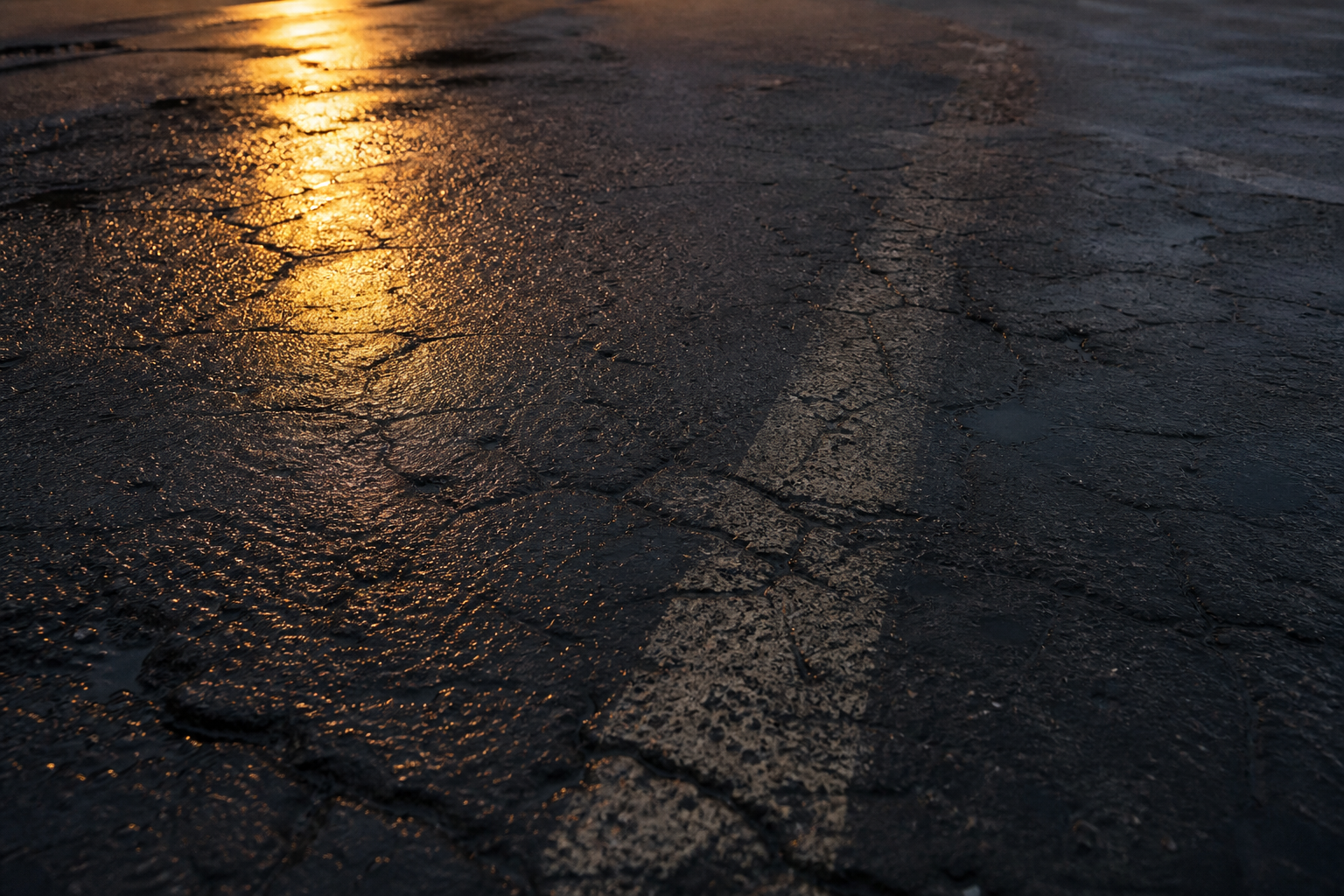
By the time I reached the lower footpath, the streetlights had come on. They come on all at once on this stretch — a row of sodium lamps casting amber pools that overlap at the edges, leaving thin dark seams between them. I walked through the light and the dark alternately, like passing through rooms with different temperatures. The asphalt underfoot was warm through my soles. I could feel it through the rubber — not uncomfortable, but present, a reminder that the road is not inert. It stores and releases. It breathes on a timescale slower than ours.
Havelock Road appeared at the bottom of the descent like a wider, faster version of the hillside streets above. More cars, more buses, the faint smell of exhaust mixing with the green smell of hedge clippings from a recently trimmed verge. I turned left and walked along the river-facing side, where the footpath is wide enough for two abreast and the railings are painted green and chipped at the corners. Joggers passed me in both directions — earbuds in, eyes forward, treating the footpath as a track rather than a place. I do not jog. I walk at the speed of someone who is not going anywhere in particular.
What I notice on this walk is always the same and always different. Tonight: a child learning to ride a bicycle on the wide pavement near the bus stop, her father running behind with one hand on the seat. A group of workers sitting on a low wall sharing food from a plastic container, their safety vests folded beside them. A bus pulling away from a stop with the particular wheeze of air brakes releasing. The river was visible between buildings — dark water, a barge moving slow enough that its wake did not reach the near bank.
I walked as far as the pedestrian crossing near the old warehouse conversions, then turned back. The return climb is the part that tells you what the walk cost. The heat I had not noticed descending announced itself on the way up — calf muscles working, shirt damp at the lower back, the asphalt still radiating upward though the air had cooled by a degree or two. Streetlights hummed. A window somewhere played music at a volume meant for the room, not the street, but the street received it anyway.
At the fourth landing of Blk 8 I stopped and looked down the slope I had just climbed. From this height Havelock was a ribbon of light between darker blocks. The footpath I had walked was a thin line. The heat stored in the asphalt would leave overnight, seeping into the air and the concrete and the bodies of the tower blocks, and by morning the road would be cool again and ready to store another day. I went inside, showered, and sat by the window for a while watching the last amber pools fade as the lamps dimmed for the late shift.
Evening walks toward Havelock are not exercise and not exploration. They are a way of measuring the slope — how it descends, what it connects, how the road feels underfoot at the hour when day and night negotiate. I will walk it again. The asphalt will be warm. The streetlights will come on. The slope will keep its grade.
— Lex